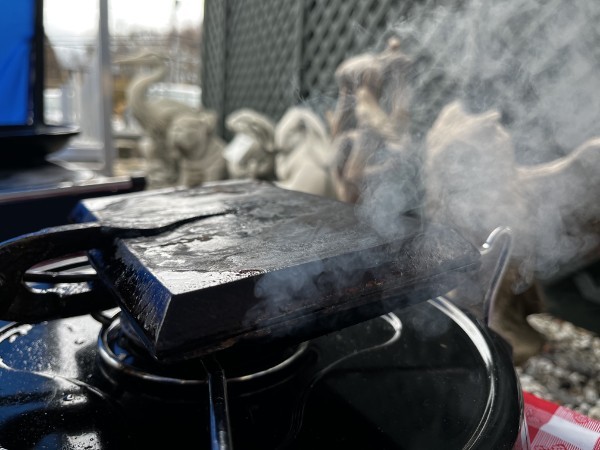
Waffle irons were common in France as early as the 12th or 13th century and became widespread in the Netherlands and the rest of Europe from the 14th century. Secular waffle irons developed alongside host presses, a similar but religious tool used to produce sacramental bread. Waffle irons were originally constructed of two hinged iron plates connected to two long, wooden handles. The plates were often made to imprint elaborate patterns on the waffle, including coats of arms, landscapes, or religious symbols. Waffles would be held at a distance and baked over the hearth fire. From the 9th through the 14th centuries, waffles were served plain or with honey and spices like cinnamon and ginger, often after meals as a symbolic blessing or during holidays. From the 15th century onward, toppings included sweet jams, fruits and cream.